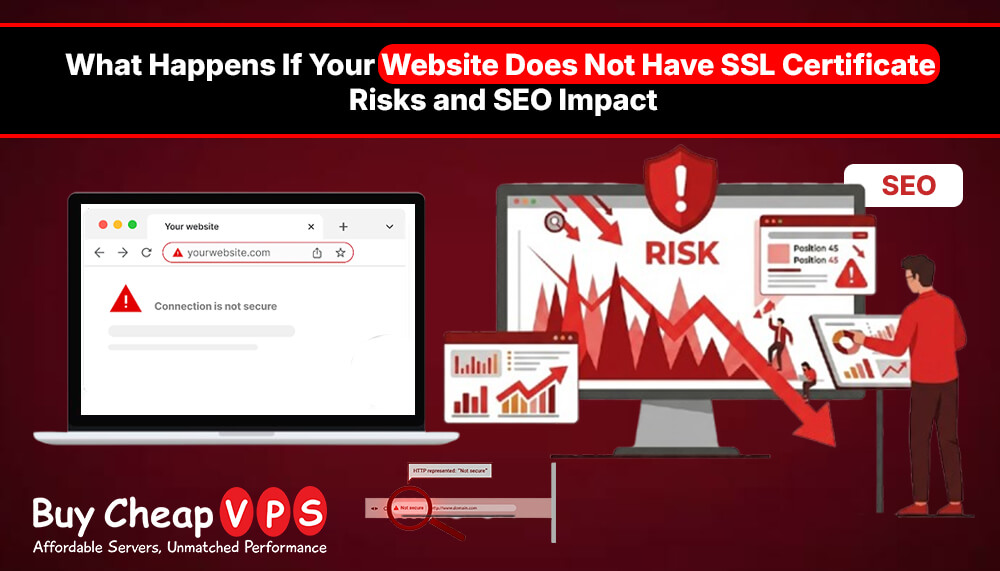
What Happens If Your Website Does Not Have SSL Certificate? Risks and SEO Impact
When you create a website like a blog, online store, or business page, one important thing you should not forget is an SSL certificate. Without SSL, your website can face many problems, and visitors may not trust your site. This guide explains why SSL is important in simple and clear language.
What Is an SSL Certificate?
SSL stands for Secure Sockets Layer. It is a security feature that protects the connection between your website and your visitors. When your website has SSL, your web address will start with HTTPS instead of HTTP. The extra “S” means your website is secure.
Your Website May Show “Not Secure” Warning
If your website does not have SSL, browsers like Google Chrome and Mozilla Firefox will show a “Not Secure” warning. This warning can make visitors feel unsafe. Because of this:
- People may not trust your website
- Visitors may leave quickly
- They may not come back again
This can reduce your website traffic and growth.
Your Data Is Not Protected
Without SSL, the data shared between your website and visitors is not encrypted. This means hackers can see and steal information such as:
- Login details
- Email addresses
- Personal messages
- Payment information
This is a serious risk, especially for websites that collect user data.
SSL Helps Improve SEO Rankings
Search engines like Google prefer secure websites. Websites with HTTPS often rank higher in search results. If your website does not have SSL:
- Your rankings may drop
- Your site may get less traffic
- It will be harder for people to find your website
Adding SSL can help improve your SEO performance.
Builds Trust with Visitors
Today, users expect websites to be secure. If they see a “Not Secure” message, they may think your site is unsafe or not professional. SSL helps:
- Build trust with visitors
- Improve your brand image
- Keep users on your website longer
You May Lose Sales and Leads
If you run a business website, not having SSL can directly affect your sales. Visitors may:
- Leave before completing a purchase
- Avoid filling out forms
- Choose another website instead
This means you can lose customers and business opportunities.
Protection Against Phishing and Attacks
Websites without SSL are more open to online threats like phishing and data attacks. Hackers can create fake versions of your site to trick users. SSL helps confirm that your website is real and protects your visitors from scams.
Conclusion
An SSL certificate is not optional for modern websites. It protects your visitors, improves trust, and helps your website rank better on search engines. Even if your website is simple and does not collect sensitive data, SSL is still important. If your website does not have SSL yet, now is the best time to add it and keep your site secure.